 June Power
Pre-tested bidirectional inverters optimized for high tropical humidity, weak grid interconnects, and heavy inductive cannery refrigeration loads.


Addressing heavy diesel displacement, fish processing volatility, and harsh marine environments in the Western Province.
Noro serves as the economic hub of the New Georgia Islands, hosting deep-water tuna transshipment berths and industrial canning plants. These facilities demand non-linear peak currents to drive blast freezers and centrifugal wastewater pumps, exposing standard grid components to dangerous transient sags.
With maritime freight heavily inflating imported diesel fuels across the Solomon archipelago, unsubsidized localized kWh prices represent massive operational overhead. High-efficiency PCS units enable seamless solar PV integration, capping diesel run-hours to emergency backup cycles.
Operating less than 500 meters from marine coastlines, power conversion gear in Noro encounters chronic salt-spray, ambient relative humidity exceeding 85%, and elevated equatorial temperatures. Engineered conformal coating and isolated airway topologies are vital to prevent premature PCB failure.
From voltage-source inverter controls to multi-microgrid synchronization without synchronous inertia reliance.
Conventional grid-following PCS architectures rely entirely on external voltage references produced by diesel gen-sets. Our next-generation grid-forming algorithms mimic real rotor mechanical inertia, automatically regulating system frequency (P-f) and AC voltage (Q-V) in sub-cycle timescales. This enables 100% renewable penetration scenarios across Noro without line stability collapse.
In total system collapse scenarios caused by regional cyclone disturbances or sudden branch cutoffs, our PCS delivers black-start soft ramp excitation. Integrated step-up magnetic design gradually magnetizes commercial step-up transformers (e.g., 400V to 11kV), eliminating massive inrush spikes that trip auxiliary distribution circuits.
Remote Western Province facilities require autonomous supervision. Our conversion systems integrate dual-redundant Industrial IoT modules communicating over terrestrial 4G/GPRS networks and high-throughput Low Earth Orbit (LEO) constellations, streaming high-speed event telemetry to centralized headquarters without requiring high-speed local fiber.
Addressing isolated logistics costs, our non-isolated multi-channel DC converters support wide input ranges (150V–1000V). This enables economic retrofitting with decommissioned EV packs or legacy lead-carbon chemistries, maximizing CAPEX lifecycle efficiency across secondary island substations.
Engineered deployments for commercial facilities, utility networks, and multi-megawatt PV fields.


Hunan June Power Technology Co., Ltd. is a national high-tech enterprise positioned at the leading edge of energy transformation, headquarted with primary R&D nodes in Jiangbei New Area, Nanjing. June focuses entirely on the high-level R&D, precision manufacturing, and system deployment of bi-directional PCS units, hybrid multi-source inverters, integrated ESS cabinets, and islanded microgrid architectures.
With an expansive manufacturing footprint exceeding 100,000 m2, our Industry 4.0 production ecosystem features automated SMT surface mounting lines, nitrogen wave soldering, vacuum conformal coating enclosures, and 100% full-load burn-in regenerative testing laboratories. Our global deployment footprint encompasses over 100 countries and regions spanning Oceania, Europe, the Americas, Africa, and Southeast Asia.
To assure unbroken lifecycle performance for regional installations like Noro, our direct support framework operates regional logistics and engineering hubs in Warsaw, Los Angeles, Tokyo, and Riyadh, backed by institutional research partnerships with NUAA, NUIST, and NJUIT.
Request Technical Dossier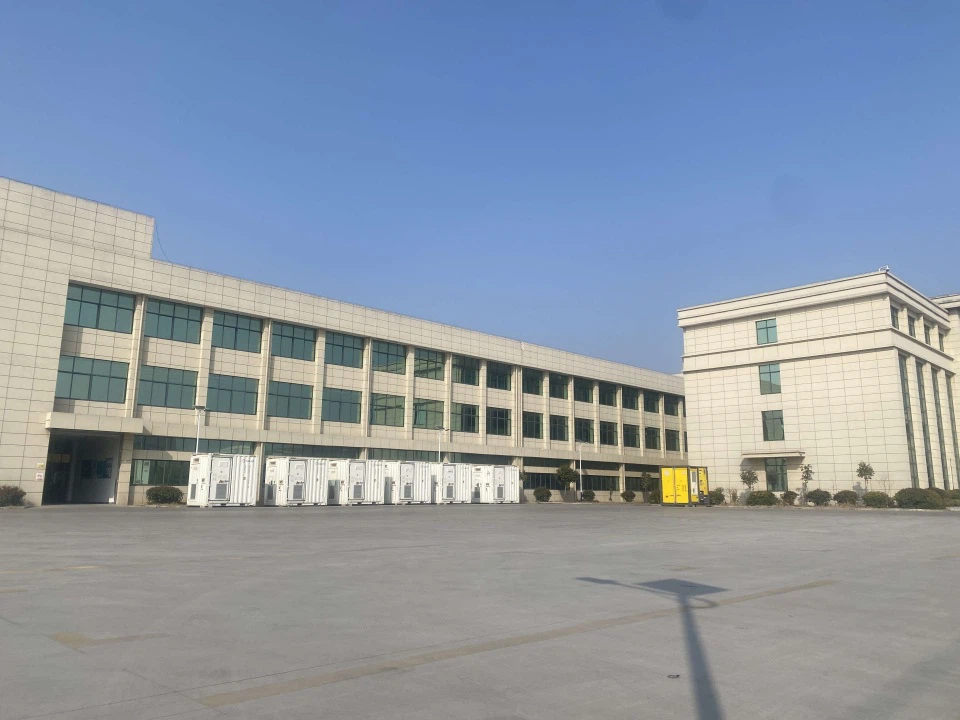


End-to-end operational rigor securing mission-critical capital equipment across Pacific island trade lanes.
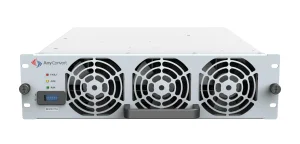
Our power conversion systems comply comprehensively with AS/NZS 4777.2, IEC 62109-1/-2, IEC 62477-1 safety directives, and IEEE 1547 standards. Units undergo rigorous type-testing for total harmonic distortion (THD < 3%), surge withstand (IEEE C62.41), and electromagnetic compliance (CISPR 11 Class A).
Consignments heading to the Port of Noro are prepared inside heavy-duty moisture-barrier vacuum packaging with IP54/NEMA 3R stainless steel/marine-grade aluminum enclosures. We accommodate flexible CIF/DDP freight configurations directly partnering with Pacific shipping lines.
To eliminate prolonged downtime in oceanic territory, our PCS models utilize modular, field-replaceable units (FRUs). Driver cards, power electronics IGBT stacks, cooling blowers, and control sub-racks can be swapped within 30 minutes by certified plant electricians using basic tooling.
Fully certified bidirectional power conversion solutions and system integration components for commercial resilience.



Clear answers on harsh environment engineering, shipping paths, and system integration specifics.
All PCS units destined for coastal island zones undergo C4/C5 marine atmospheric preparation. Internal circuit assemblies feature double-pass conformal polyurethane coating (IPC-CC-830 certified), busbars are high-spec nickel/tin plated, and internal electronic compartments use separate isolated cooling airflow chambers to prevent corrosive salt aerosols from crossing high-voltage components.
Yes. Our microgrid systems support hybrid multi-source integration utilizing dry contacts, Modbus TCP/RTU, and CAN bus protocols. The PCS can execute automated genset stop/start signals, maintain load-sharing setpoints to protect gen-sets from destructive reverse power feeding, and handle rapid dynamic step-loading without triggering engine stall.
Standard equipment fabrication and testing run between 3 to 5 weeks depending on model volume. Direct containerized maritime shipping from East Asian ports to Noro (transshipping through Honiara or Port Moresby) typically requires 20 to 28 days transit time. Factory acceptance test (FAT) inspection videos, test logs, and comprehensive documentation are furnished prior to container departure.
Silicon Carbide (SiC) devices support dramatically higher switching frequencies and deliver overall conversion efficiencies topping 98.8%. This dramatically reduces parasitic heat loss inside enclosures, minimizing thermal management stress under tropical ambient conditions and reducing cabinet footprint by up to 40% compared to legacy silicon IGBT solutions.
Partner with an established manufacturer offering multi-megawatt capacity, verified grid-forming stability, and continuous global technical engineering support.
Send Inquiry Now