June Power
June Power
June Power
Explore high-performance off-grid inverters, battery management components, and energy conversion systems engineered for rigorous industrial infrastructure.
Modern power grids are undergoing an unprecedented structural transition. The proliferation of non-linear loads—ranging from variable frequency drives (VFDs) and heavy-duty rectifiers to massive server racks in data centers—has led to severe harmonic pollution. This contamination deteriorates power networks, triggers equipment overheating, disrupts communication systems, and introduces substantial energy penalties.
An Active Power Filter (APF) represents the pinnacle of modern electrical mitigation technology. Unlike traditional passive filters that rely on LC tuned circuits (which are susceptible to grid resonance issues), APFs employ active switching architectures using Insulated Gate Bipolar Transistors (IGBTs) to monitor load currents in real-time. By injecting equal and opposite phase-canceling currents, APFs reduce Total Harmonic Distortion (THDi) to less than 3% or 5%, complying with stringent international power quality standards such as IEEE 519.
Harmonics cause increased core losses due to eddy currents and hysteresis, reducing transformer service life by up to 50%.
Nuisance tripping of thermal-magnetic breakers occurs due to high peak currents and frequency components.
Distortion power factor reduces displacement power factor, leading to severe utility surcharge penalties.
June Power's highly integrated energy systems are designed to operate across diverse industrial and grid-scale deployments globally.


How procurement engineers evaluate active power filters for mission-critical installations.
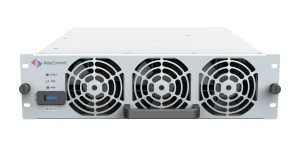
APFs are configured in modules (e.g., 50A, 100A, 150A up to 600A frames). A modular design allows system redundance (N+1 layout) and simple hot-swapping during grid-level modifications without shutting down entire installations.
Modern APFs feature advanced DSPs (Digital Signal Processors) and FPGA boards to analyze harmonics instantly. Top tier filters boast a total response time of < 5 milliseconds and a diagnostic response time of < 100 microseconds.
By employing a Neutral-Point Clamped (NPC) 3-Level IGBT topology, APF manufacturers achieve higher efficiency, reduce electromagnetic interference (EMI), and lower electrical stresses on switching components compared to 2-level designs.
Hunan June Power Technology Co., Ltd. is a national high-tech enterprise located in Jiangbei New Area, Nanjing. June focuses on the R&D, production, and sales of PCS (Power Conversion Systems), Hybrid Inverters, Energy Storage Systems (ESS), and Microgrid Systems, while also engaging in the investment, development, and construction of photovoltaic and energy storage power plants.
The company operates an R&D and manufacturing base of over 100,000 m² and its products are distributed in more than 100 countries and regions across Europe, the Americas, Oceania, Africa, the Middle East, and Southeast Asia. To deliver efficient, localized technical support and services, the company has established overseas branches in Los Angeles, Warsaw, Tokyo, and Riyadh, forming a global service network that continuously provides high-quality solutions and services to clients worldwide.
In addition, June has established strategic partnerships with several leading universities, including NUAA (Nanjing University of Aeronautics and Astronautics), NUIST, and NJUIT. Together, they have set up doctoral research workstations and co-developed talent cultivation platforms dedicated to the transformation of scientific achievements in the new energy sector, providing solid support for continuous innovation and breakthroughs in energy storage technologies and microgrid systems.


An authoritative compilation of leading global active power filter and power quality correction developers.
| Rank | Manufacturer Name | Headquarters | Key APF Strengths | Target Industries |
|---|---|---|---|---|
| 1 | ABB Ltd | Switzerland | Ultra-fast PQFS & PQFM series, high reliability in harsh environments. | Industrial plants, marine vessels, heavy mining |
| 2 | Schneider Electric | France | AccuSine PCS+ series, robust dynamic VAR & harmonic control. | Data centers, large hospitals, HVAC grids |
| 3 | Siemens AG | Germany | SIPCON series, high voltage network compatibility, grid-scale systems. | Transmission grids, heavy manufacturing |
| 4 | Delta Electronics | Taiwan, China | Highly modular APF2000 series, cost-effective high-density power modules. | Semiconductor fabs, automation lines |
| 5 | Hunan June Power Technology | China | Integrated PCS/ESS power quality controllers, doctoral workstation R&D. | Microgrids, BESS, C&I, Solar integration |
| 6 | Fuji Electric | Japan | High precision active filters using proprietary in-house IGBT technology. | Robotics plants, printing, precision fabrication |
| 7 | Danfoss | Denmark | VLT Advanced Active Filters (AAF), specialized for drive-heavy motors. | Water treatment, paper mills, maritime drives |
| 8 | Eaton Corporation | United States | Energy Saver System combined with robust clean-power harmonics designs. | IT facilities, commercial high-rise buildings |
| 9 | TMEIC | Japan | High power medium-voltage active filters designed for utility projects. | Steel mills, chemical processing plants |
| 10 | Hitachi Energy | Switzerland | Grid-scale STATCOM and high-capacity APF systems for transmission lines. | Substations, wind & solar farm collector grids |
Selecting a power quality partner from this group depends on your structural needs. For standard commercial settings, Schneider and Eaton offer easily configured building systems. For severe grid-level complications, heavy machinery, or integrations with battery storage (BESS) and microgrid structures, manufacturers operating dual R&D bases like Hunan June Power Technology provide high levels of system synergy and custom engineering support at competitive pricing structures.
China has transitioned from a regional assembly hub to a global leader in power electronics R&D. Modern facilities, like the ones run by Hunan June Power Technology Co., Ltd., use advanced manufacturing tools such as robotic wave soldering systems, automated thermal chambers, and dynamic full-load testing loops.
This setup enables Chinese suppliers to manufacture highly reliable active power filters and grid-tied converters that meet CE, UL, and IEEE benchmarks. Partnerships with local academic institutions, including NUAA and NJUIT, provide continuous research, resulting in improvements in IGBT switching efficiency, thermal design, and grid modeling algorithms.
For global EPC (Engineering, Procurement, and Construction) companies and industrial system builders, partnering with Chinese manufacturers provides direct access to high-performance, cost-effective technologies. This ensures project timelines remain on schedule without sacrificing quality or system stability.
Strategic considerations for buyers selecting active power filters for international industrial and commercial projects.
Explore our robust lineup of high-frequency hybrid inverters, water treatment systems, and grid-scale container storage cabinets.
Technical answers to key power quality, active power filter, and storage integration questions.