June Power
In 2026, the push to reduce dependency on utility grid power has gained urgency. Industry expert Dr. Emily Carter states, "Embracing renewable energy sources is vital for sustainable living." This highlights the need for individuals and businesses alike to rethink their energy consumption.
Innovative solutions are available to help achieve this goal. Solar panels, battery storage systems, and energy-efficient appliances can significantly cut reliance on traditional power sources. Yet, many still hesitate to invest in these technologies due to upfront costs or lack of information. This reluctance can stall progress in energy independence.
Adopting these methods requires commitment and awareness. Communities must come together to share experiences and support each other in this transition. Exploring funding options or incentive programs can help alleviate financial concerns. Ultimately, every effort to reduce dependency on utility grid power paves the way for a sustainable future.
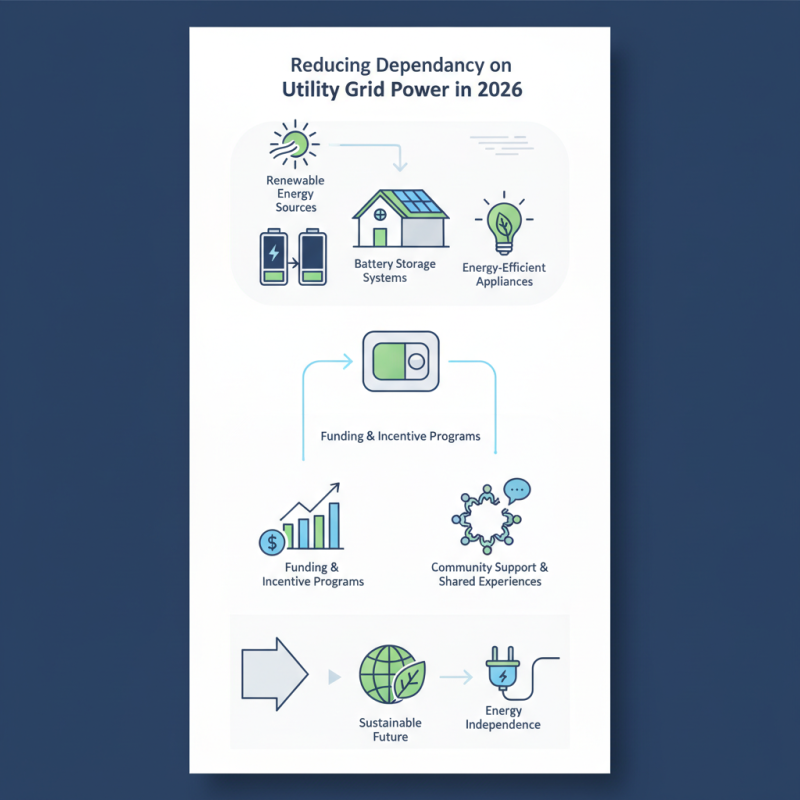
Innovative technologies for off-grid power generation are transforming how we approach energy. In 2026, we can expect advancements that make independence from the utility grid more accessible.
Solar panels are becoming more efficient. New materials can absorb sunlight better and convert it into usable energy. Installing them on rooftops or unused land can provide substantial power. Coupled with battery storage systems, homes can store energy for nighttime use. This setup minimizes reliance on the grid.
Wind turbines are also evolving. Smaller, more efficient models can be installed in residential areas. They harness wind energy, especially in places with consistent breezes. Community wind farms can even supply power for nearby homes. However, they may also require significant initial investment and space.
Tips: Consider the local climate when choosing between solar and wind power. Both options have their advantages depending on the environment. Also, evaluate your energy consumption patterns to determine the size and type of system you would need. Lastly, remember that while off-grid systems offer freedom, they come with maintenance responsibilities that shouldn't be overlooked.
As we look to 2026, minimizing utility grid dependence is essential. Energy storage solutions play a vital role in achieving this goal. Batteries, like lithium-ion variants, can store excess energy from renewable sources. This stored power can be used when demand peaks, lowering reliance on the grid.
Homeowners can consider solar panel systems paired with energy storage. Such an installation allows them to harness sunlight during the day. This energy can power homes and charge batteries for use at night. While the upfront cost may be high, long-term savings are significant. However, not every home is suitable for solar energy. Location, roof space, and weather patterns should be considered.
Additionally, community battery systems are gaining traction. These setups enable multiple households to share stored energy. The collective approach can lower individual costs and increase efficiency. However, coordination among neighbors can be challenging. Establishing trust and agreements often requires effort. Understanding these aspects is crucial in making informed decisions about energy independence.
| Energy Storage Solution | Capacity (kWh) | Cost ($ per kWh) | Efficiency (%) | Typical Lifespan (Years) |
|---|---|---|---|---|
| Lithium-ion Battery | 10 | 400 | 90 | 15 |
| Lead Acid Battery | 12 | 250 | 75 | 5 |
| Flow Battery | 15 | 500 | 85 | 10 |
| Nickel Cadmium Battery | 8 | 300 | 80 | 15 |
| Sodium-Sulfur Battery | 10 | 350 | 90 | 15 |
Harnessing renewable energy is essential for reducing dependency on the utility grid. Solar energy remains one of the most accessible options. Installing solar panels on rooftops can significantly cut electricity bills. Many homeowners have reported savings of up to 50%. However, the initial investment can be high. Not everyone can afford this upfront cost. Community solar projects can provide an alternative. These allow multiple people to share a single solar array, spreading costs and benefits more evenly.
Wind energy is another viable option. Small wind turbines can generate power for homes in areas with consistent wind patterns. These setups often balance the initial costs through long-term energy savings. Yet, they require sufficient space and wind conditions, posing challenges in urban environments. Hydro energy might be a lesser-known alternative. For those near water sources, micro-hydro systems can provide reliable electricity. These systems often struggle with permitting and environmental impact assessments.
Exploring these renewable resources requires thorough research. Each option has specific limitations and benefits. A thorough analysis can reveal which solutions best fit the local context. Community education plays a vital role in driving adoption. Knowledge about different technologies helps individuals make informed decisions. Even simple adjustments in daily energy habits can complement these renewable solutions effectively.
Smart home solutions are revolutionizing energy management, providing a way to reduce dependency on utility grid power. Homeowners can now utilize automated systems to control energy consumption. Smart thermostats, for example, learn user habits and adjust heating or cooling accordingly. This can lead to significant savings on energy bills, while also reducing carbon footprint.
Another effective solution is the integration of solar panels with smart home technology. By harnessing renewable energy, homeowners can offset their reliance on the grid. Energy monitoring apps allow users to track their consumption in real-time. This transparency encourages mindful energy usage, yet many still find it challenging to adapt their habits.
Smart lighting systems can also transform energy management at home. Using motion sensors, lights only activate when needed. This not only saves energy but also increases convenience. However, the initial setup and investment can be daunting for some. Exploring financing options or gradual upgrades may help ease this transition. Adapting to smart home technologies requires effort, but the potential benefits are significant.
Community-based approaches to energy independence are gaining traction. Local groups are forming to harness renewable resources. These initiatives focus on solar, wind, and bioenergy. Residents are pooling funds to invest in shared energy systems. This collaborative spirit promotes resource sharing and reduces costs.
Participation in community projects helps build trust and cooperation among neighbors. Workshops educate members about energy efficiency and conservation. Knowledge sharing is vital. Communities can collectively identify their energy needs. This detailed approach fosters a sense of ownership and accountability. However, challenges exist. Coordinating between diverse interests may be difficult. Balancing individual needs with communal goals requires constant reflection.
Innovative models are emerging. Microgrids allow communities to operate independently from the utility grid. They enhance resilience in case of outages. Some projects face funding hurdles. Engaging with local governments can promote policy changes. Communities must remain adaptable as energy technologies evolve. Embracing this uncertainty is crucial for sustainable progress.
: Solar panels will become more efficient, using new materials for better sunlight absorption.
By installing solar panels combined with battery storage systems, homes can store energy for nighttime use.
Smaller wind turbines are available, but they need enough space and can require high initial costs.
Energy storage solutions, like batteries, store excess renewable energy for use during peak demand.
Yes, combining both systems can optimize energy generation based on local weather conditions.
Coordinating among neighbors and establishing trust can be difficult in community battery setups.
Smart thermostats learn user habits and adjust heating or cooling for efficiency and lower bills.
Smart home technology helps manage energy use effectively, reducing reliance on the utility grid.
These apps provide transparency, encouraging users to be mindful but some struggle to change habits.
Exploring financing options or upgrading gradually can help alleviate the initial investment concerns.
In 2026, reducing dependency on utility grid power will be more attainable than ever through the integration of innovative technologies and energy solutions. Advances in off-grid power generation, such as solar and wind energy, will empower individuals and communities to harness renewable resources effectively. Energy storage solutions will also play a crucial role, allowing users to store excess energy for later use, thus minimizing reliance on grid power.
Moreover, smart home solutions are set to transform energy management by optimizing consumption patterns and enhancing efficiency. Community-based approaches will encourage collaborative efforts toward energy independence, fostering a sense of solidarity while promoting sustainable practices. Together, these strategies will pave the way for a future where reducing dependency on utility grid power becomes a practical reality for many.
