In the rapidly evolving world of energy storage, scalability remains a critical challenge. Experts like Dr. Emily Johnson, a renowned energy systems researcher, emphasize the necessity to "Improve Scalability of Energy Storage Solutions" to meet growing energy demands. As renewable energy sources gain traction, the need for effective storage solutions is paramount.
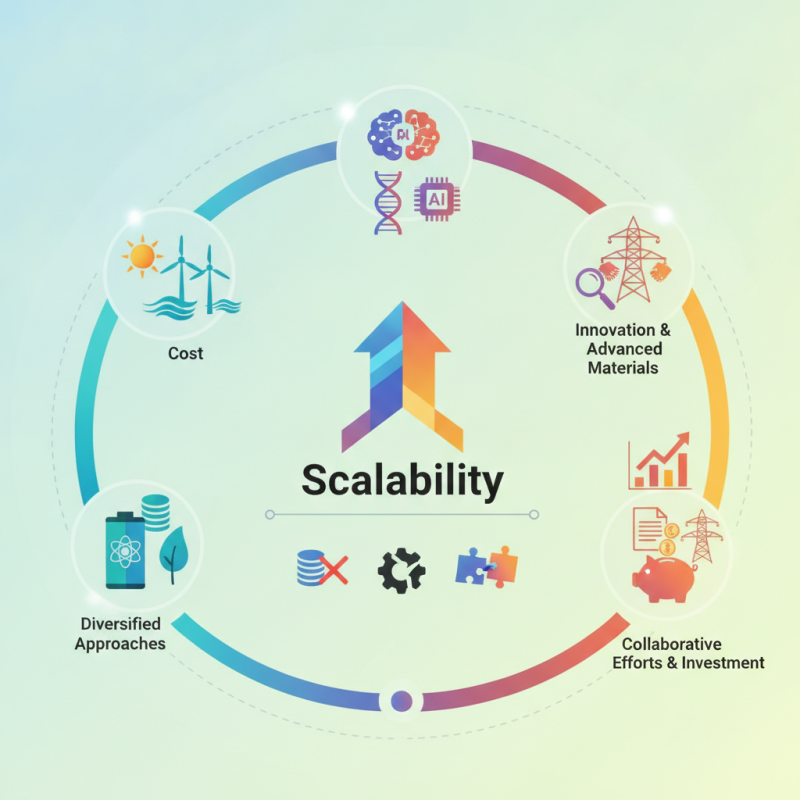
Current storage technologies often struggle to scale efficiently. Factors such as cost, technology limitations, and integration with existing systems create barriers. For instance, lithium-ion batteries dominate the market, yet their scalability faces scrutiny due to resource availability and environmental concerns. This highlights the need for diversified approaches and innovative solutions.
Moreover, addressing the scalability issue requires collaborative efforts across industries. The integration of artificial intelligence and advanced materials can enhance performance. However, implementing these advancements isn’t straightforward. It demands significant investment and a shift in existing paradigms. Continuous research and development are essential to find viable pathways that ensure the scalability needed for a sustainable energy future.
Strategies for Increasing Energy Storage Capacity through Advanced Technologies
The demand for energy storage solutions is increasing rapidly. To meet this need, advanced technologies are pivotal. Energy storage systems currently account for less than 5% of total energy capacity in many regions. This suggests a vast potential for growth. Innovations in battery technology, such as solid-state batteries, can enhance energy density. According to recent studies, these batteries can provide up to 1.5 times more capacity than traditional lithium-ion batteries.
Smart grid technologies play a crucial role in optimizing energy usage. Integrating artificial intelligence can streamline energy distribution. This reduces waste and enhances efficiency. Research indicates that AI can improve grid stability by 30%, leading to better resource management. Efficiency is paramount; however, challenges remain in scalability and cost. Advanced materials also present an opportunity. Graphene-based technologies could significantly enhance conductivity and lifespan, yet research funding often falls short.
Manufacturing processes must also evolve. Automation could lower production costs. However, this raises questions about workforce impacts and sustainability practices. Developing a mature recycling system for batteries remains a challenge, despite the clear benefits of circular economy principles. Addressing these issues will be crucial as the industry moves forward.
Optimizing Battery Management Systems for Enhanced Scalability in Storage Solutions
Optimizing battery management systems (BMS) is crucial for enhancing the scalability of energy storage solutions. A well-designed BMS can boost efficiency and lifespan, mitigating the issues of performance degradation. Research indicates that during peak times, mismanaged energy storage can lead to a staggering 20% decrease in overall efficiency (International Energy Agency, 2022). Improving BMS helps ensure the seamless integration of various battery cells, thus allowing for effective capacity expansion.
For practical implementation, consider these tips: Monitor temperature variations closely. Significant fluctuations can affect battery health. Implement algorithms that predict battery usage patterns. This enables more accurate management of charge cycles and prolongs battery lifespan. A recent report highlights that optimized charge cycles can achieve a 15% increase in performance (Energy Storage Association, 2023).
BMS challenges remain. Many systems struggle with real-time data analysis. This can lead to inefficiencies in energy allocation. Furthermore, outdated systems may not support modern energy demands. Continuous evaluation and upgrades are essential. Utilize actionable data to refine energy usage and improve scalability in storage solutions.
How to Improve Scalability of Energy Storage Solutions Effectively?
| Dimension |
Description |
Current Value |
Target Value |
Improvement Strategy |
| Energy Density (Wh/L) |
Measure of energy stored per volume |
200 |
300 |
Enhancing materials with higher energy retention |
| Cycle Life (Cycles) |
Number of charge/discharge cycles before failure |
1500 |
5000 |
Implementing advanced battery chemistries |
| Charge Time (Hours) |
Time taken to fully charge the battery |
8 |
2 |
Utilizing fast-charging technology |
| Cost per kWh ($) |
Cost incurred to store one kilowatt-hour of energy |
300 |
150 |
Economies of scale in manufacturing |
| Safety Rating |
Measure of risk associated with battery failure |
Good |
Excellent |
Implementing robust safety protocols |
Deploying Hybrid Energy Storage Systems for Greater Flexibility and Efficiency
Hybrid energy storage systems combine various technologies to optimize efficiency. This flexibility helps address the intermittent nature of renewable energy sources. By integrating batteries with other systems, like flywheels or supercapacitors, we create a more resilient grid. Each component brings strengths to the table.
Batteries are great for long-term storage, while flywheels excel in short bursts of energy.
Deploying these hybrid systems can be complex. Engineers often face challenges in system integration and management. Balancing performance and cost is not always straightforward. Real-time data monitoring becomes essential for ensuring reliability. This practice might expose gaps in performance that require further attention. Continuous assessment and tuning are necessary for success.
Implementation in various settings can yield mixed results. For instance, urban areas might benefit from quick response times. Meanwhile, rural locations may have different needs. Tailoring the approach to specific environments is crucial. Without proper adjustments, efficiency gains may be limited. Exploring regional demands will enhance the effectiveness of hybrid energy storage systems.
Utilizing Renewable Energy Sources to Boost Energy Storage Scalability
Renewable energy sources play a pivotal role in enhancing the scalability of energy storage solutions. By harnessing solar, wind, and hydro energy, we create a diverse energy portfolio. This diversity is critical for addressing demand fluctuations. For instance, solar panels generate energy during the day, while wind turbines may produce power at night. Energy storage systems, like batteries, can store excess energy when production exceeds consumption.
However, the integration of renewable sources into energy storage systems is not without challenges. Variability in renewable energy generation can lead to unpredictability. Energy storage technologies must adapt to these fluctuations. Effective forecasting methods are essential, but they are often imperfect. Acknowledging these limitations allows us to refine our approaches. Continuous research and development can optimize energy storage systems and improve their efficiency.
Moreover, we must consider geographical constraints. Many regions excel in specific renewable resources but lack others. This can hinder overall scalability. Collaborating across regions to share energy and best practices can provide solutions. By building a more interconnected energy grid, we can leverage renewable resources effectively. As we progress, we must remain committed to innovation and adaptability.
Energy Storage Solutions Scalability using Renewable Energy Sources
Cost-Benefit Analysis of Scaling Up Energy Storage Solutions for Utilities
Scaling up energy storage solutions presents a significant opportunity for utilities. Conducting a cost-benefit analysis reveals key insights into this complex process. Various technologies, such as lithium-ion and flow batteries, offer different efficiencies and lifespans. Selecting the right technology affects both initial investment and maintenance costs. Utilities must evaluate these factors carefully to improve scalability.
Investment in energy storage can reduce operational costs. However, the initial capital required can be daunting. Public-private partnerships can alleviate financial burdens. They help in sharing risks and leveraging expertise. Additionally, understanding regulatory frameworks is crucial. Some regions provide incentives for cost-effective energy storage solutions. Not every utility may benefit equally. Local energy demands and infrastructure maturity vary significantly.
The analysis should include potential savings on peak demand charges. These charges can drain budgets. A detailed projection of expected returns can guide decision-making. However, utilities must remain cautious. Overestimating savings can lead to financial strain. Continuous monitoring and adjustments in strategy are essential to adapt to market changes. Balancing ambition with realistic assessments is the key to successful scalability.
FAQS
: Energy storage addresses the growing demand for efficient and reliable energy solutions.
Advanced technologies, like solid-state batteries, enhance storage capability significantly.
Smart grids optimize energy use, reducing waste and improving efficiency in distribution.
Many systems struggle with real-time data, affecting energy allocation efficiency.
Improved charge cycles can lead to a 15% increase in battery performance.
It helps utilities understand the financial implications of scaling energy storage technologies.
Significant temperature fluctuations can lead to decreased battery lifespan and efficiency.
Developing mature recycling systems remains difficult despite their importance for sustainability.
They help share financial risks and leverage expertise to ease capital burdens.
Overestimating savings can lead to significant financial strain and misallocation of resources.
Conclusion
To effectively improve scalability of energy storage solutions, it is essential to adopt a multifaceted approach. This includes leveraging advanced technologies to increase energy storage capacity and optimizing battery management systems for enhanced operational efficiency. By deploying hybrid energy storage systems, users can achieve greater flexibility and efficiency, making the energy storage solutions more versatile in varying conditions.
Incorporating renewable energy sources further enhances the scalability of these solutions, enabling a more sustainable approach to energy management. Additionally, conducting a comprehensive cost-benefit analysis allows utilities to assess the feasibility of scaling up energy storage solutions, ensuring that investments are aligned with expected returns. Through these strategies, stakeholders can significantly improve scalability of energy storage solutions, ultimately contributing to a more robust and resilient energy infrastructure.
 June Power
