June Power June Power

10 Best Ways to Enhance Safety in Energy Storage

Time:2026-09-23 Author:Mason
0%

Energy storage is becoming essential for resilient grids, renewable integration, and reliable backup power. Yet every battery system carries practical risks, including thermal runaway, electrical faults, gas release, and delayed fire spread. A safe design must protect people before equipment, and communities before convenience.

This introduction to “10 Best Ways to Enhance Safety in Energy Storage” focuses on measurable protection across the system’s lifecycle. It considers cell selection, battery management systems, thermal monitoring, ventilation, fire detection, emergency shutdowns, installation spacing, maintenance, staff training, and incident reporting. Dr. Shirley Meng, a leading battery scientist, has emphasized a principle that should guide every project: “Safety cannot be an afterthought; it must be engineered from the beginning.” Her point is clear. Sensors must detect abnormal heat before flames appear. Operators need visible alarms, tested procedures, and safe access routes. A cabinet should not become a sealed metal box during an emergency.

The goal is to Enhance Safety Protection in Energy Storage Applications through layered controls, not one promising device. Experience from field operations shows that small details matter, such as blocked vents, loose connections, damaged cables, or ignored warning codes. Human error remains possible. So does incomplete data. That is why responsible teams review failures without hiding uncomfortable findings, then improve their procedures. No protection plan is perfect. Stronger safety comes from disciplined design, independent testing, continuous monitoring, and honest learning. Reliability is built before an incident, not during one.
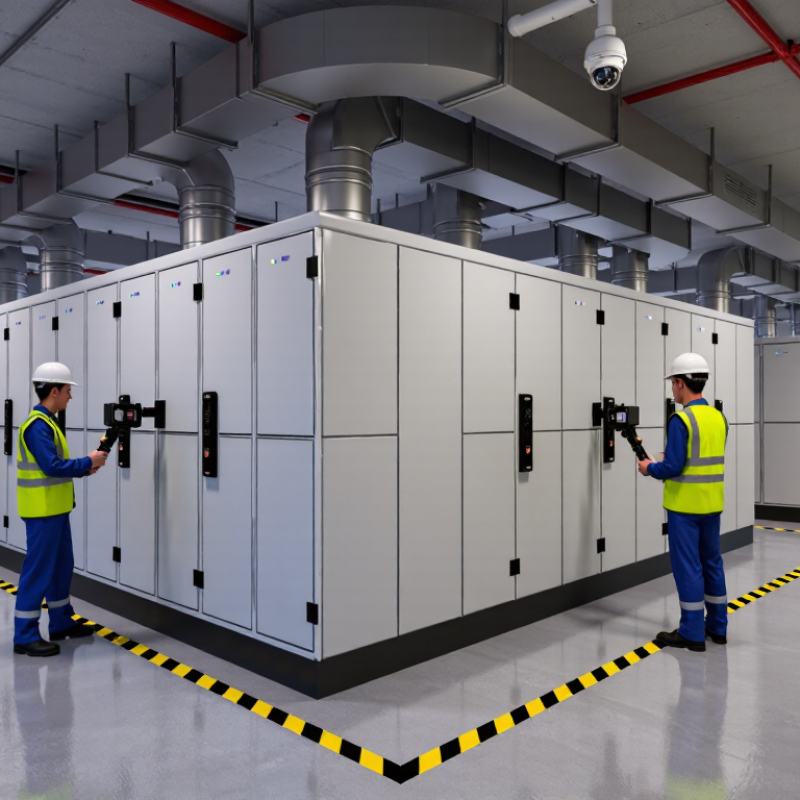
10 Best Ways to Enhance Safety in Energy Storage

Establish a Comprehensive Risk Assessment for Energy Storage Systems

Establishing a comprehensive risk assessment is the foundation of safer energy storage. The International Energy Agency reported in Batteries and Secure Energy Transitions (2024) that global battery storage capacity must expand sixfold by 2030. Rapid growth increases the need for disciplined planning, not improvised controls. Assess hazards across the full lifecycle, from transport and installation to operation, maintenance, and decommissioning. Map thermal runaway, electrical faults, flooding, fire spread, toxic gas release, and emergency access. Risk changes with time.

Use site-specific evidence. Review cell chemistry, enclosure design, ventilation, separation distances, detection systems, and firefighting limitations. Apply recognised methods, including UL 9540A test results and NFPA 855 guidance, where applicable. The assessment should examine credible failure scenarios, not only normal operation. Include nearby buildings, water supplies, weather exposure, and first-responder routes. The Energy Institute’s Process Safety Leadership principles also support clear accountability and continuous learning. However, test data cannot represent every field condition. That gap deserves attention.

Tips:

  • Create a live risk register with owners and deadlines.
  • Inspect sensors and extinguishing systems at defined intervals.
  • Record small alarms, not only major incidents.
  • Run tabletop exercises with operators and emergency services.
  • Reassess after software changes, equipment replacement, extreme weather, or unusual temperature patterns.
  • Independent review can expose weak assumptions.

No assessment is perfect. That is exactly why it must evolve.

Design Safe Battery Installations and Effective Thermal Management

Safe energy storage begins with the installation, not the emergency response plan. A battery room needs clear access, stable flooring, protected cables, and enough space for inspection. Place modules away from ignition sources and unprotected water lines. Use barriers where vehicles or tools could strike enclosures. Ventilation should match the battery chemistry, room volume, and expected fault conditions. Gas detection may be necessary, but sensors cannot replace airflow design. Small gaps matter.

Each unit should have an accessible disconnect and clearly labeled isolation point. Installations should include overcurrent protection, grounding, and monitoring suited to the system voltage. Qualified engineers should verify load calculations, fault levels, and separation distances against current local requirements. Records should show torque checks, test results, and later changes.

Effective thermal management controls heat before it becomes an emergency. Measure temperature at cell groups, connections, and the hottest expected enclosure areas. A cooling system should handle normal operation, blocked filters, and one failed component. Air paths must remain open; dust buildup can quietly reduce performance. Liquid systems need leak detection, secure fittings, and a safe response plan. Thermal barriers can slow propagation, but they are not magic.

During commissioning, operators should test alarms, shutdown logic, and remote notifications under controlled conditions. Review readings after heavy cycling and during seasonal temperature changes. Field inspections often reveal practical problems, such as a sensor mounted too far from a hot connection. That detail can undermine a polished design. No installation is perfect. Teams should record near misses, question assumptions, and update procedures when evidence changes.

10 Best Ways to Enhance Safety in Energy Storage

Design safe battery installations with appropriate spacing, battery-management systems, overcurrent protection, fire detection, ventilation, emergency shutdowns, thermal barriers, gas monitoring, preventive maintenance, and effective thermal management. The chart compares representative thermal runaway onset temperatures for common battery chemistries. Higher values generally indicate greater thermal stability, but actual performance depends on cell design, state of charge, aging, and operating conditions.

Values are approximate representative literature ranges converted to midpoint estimates; always verify the specific cell manufacturer’s safety data and installation requirements.

Implement Reliable Monitoring, Detection, and Emergency Shutdown Systems

Energy storage safety depends on decisions made before a fault becomes visible.

Reliable monitoring tracks cell voltage, temperature, current, insulation resistance, and gas levels continuously. Sensors should report at both module and system levels. This matters when one warm cell hides inside a normal average. In field testing, a temperature trend often warned us before an alarm sounded.

Small details matter. Data needs time stamps, calibration records, and protected communication paths. Operators should see clear thresholds, not confusing streams of numbers.

Detection must connect measurement with action.

Thermal, smoke, pressure, and gas detectors can identify different failure stages. A single sensor is never enough. Alarm logic should distinguish warnings from critical events. The system can reduce charging power, isolate a cabinet, and notify trained personnel.

Emergency shutdown devices need accessible locations, physical labels, and routine functional tests. Pressing the shutdown button should produce a known response within a defined period.

During one commissioning drill, we found a delayed signal.

The software appeared healthy, but a network setting slowed the command. That result changed our testing practice. Simulations should include lost communications, false alarms, sensor drift, and power failure.

Shutdown is not the end of the procedure.

Ventilation, remote isolation, fire response, and re-entry controls must coordinate safely. Staff need short instructions they can follow under stress.

Records should show who tested each device and what happened. Independent reviews add credibility after modifications or unusual alarms.

No arrangement is flawless. A sensor can fail, and people can misunderstand an alert. Regular drills expose those weaknesses before an actual incident.

Strengthen Fire Protection, Incident Response, and Maintenance Procedures

Energy storage safety begins with disciplined fire protection. Keep clear spacing around cabinets, containers, and emergency access lanes. Install detection systems suited to the battery chemistry and site conditions. Inspect alarms, ventilation, suppression equipment, and thermal sensors on a documented schedule. A qualified engineer should verify fire zones against local codes and updated risk assessments. Do not treat a clean inspection report as proof of zero risk.

Incident response must be simple enough to use under pressure. Post site maps near entrances, showing isolation points, battery locations, hydrants, and restricted areas. Train operators to recognize heat, swelling, unusual odors, smoke, and repeated alarms. Define who calls emergency services and who controls site access. Run realistic drills with firefighters, including night-time scenarios. Keep evacuation routes visible. They must stay clear. Record every drill, including delays, unclear instructions, and equipment failures.

Maintenance protects safety between emergencies. Use approved procedures for isolation, inspection, cleaning, firmware checks, and damaged-unit handling. Review temperature trends and alarm history, not only visible conditions. Replace defective sensors promptly, and quarantine equipment after abnormal heating or impact. Independent inspections can reveal issues internal teams overlook.

One field lesson deserves attention: paperwork may look complete while a blocked access door remains unnoticed. Procedures need revision when people hesitate, improvise, or discover gaps. Safety improves through those uncomfortable findings.

Train Personnel and Improve Safety Through Continuous Performance Reviews

Safety in energy storage depends on trained people, not equipment alone. Personnel should understand thermal runaway indicators, electrical isolation, ventilation controls, and emergency communication.

Training must include hands-on drills. A supervisor can place a mock alarm beside a battery enclosure and observe the response.

Does the operator recognize abnormal heat? Can they isolate the affected section without creating another hazard? These questions expose practical gaps that classroom slides often miss.

Use clear checklists, controlled scenarios, and documented competency assessments. Refresh training after equipment changes, near misses, or revised procedures.

Our early reviews focused too heavily on attendance records. That was a weakness. A signed form did not prove safe performance.

Now, reviews examine response time, alarm recognition, communication quality, and correct use of protective equipment. Independent observers should record facts, not assumptions, during each exercise.

Review results need assigned owners and deadlines, with verification after corrective actions. Short monthly reviews can identify declining attention before it becomes an incident. Quarterly drills test deeper coordination between operations, maintenance, and emergency teams.

Still, no review is perfect. Fatigue, staffing changes, and overconfidence can distort results.

Leaders should invite uncomfortable feedback and repeat any drill that produces confusion. This creates evidence of competence, not just evidence of training.

FAQS

What should a safe battery room include?

Keep access clear, floors stable, and cables protected. Leave enough space for inspection. Small gaps matter. Use barriers near vehicles and tools.

Where should battery units be installed?

Place units away from ignition sources and exposed water lines. Check separation distances against current local requirements. A polished layout can still hide practical weaknesses.

How should ventilation be designed?

Match airflow to the battery chemistry, room size, and possible fault conditions. Gas detection may help. Sensors cannot replace proper airflow.

Which safety systems need regular monitoring?

Track cell voltage, temperature, current, insulation resistance, and gas levels. Monitor both modules and the full system. One warm cell can hide inside an average reading.

What makes an effective thermal management system?

Measure heat near cell groups, connections, and enclosure hotspots. Cooling should handle blocked filters and one failed component. Dust quietly reduces performance.

What extra precautions apply to liquid cooling systems?

Install leak detection and secure fittings. Keep a clear response plan nearby. Thermal barriers slow heat spread, but they are not magic.

How should emergency shutdown systems be tested?

Test alarms, shutdown logic, and remote notifications under controlled conditions. Confirm the shutdown button gives a known response quickly. We once found a delayed signal.

What should operators do after unusual alarms or heavy cycling?

Review readings after heavy use and seasonal temperature changes. Record near misses and update procedures when evidence changes. No arrangement is flawless. Regular drills expose hidden weaknesses.

Conclusion

Enhancing safety in energy storage begins with a comprehensive risk assessment that identifies hazards across system design, installation, operation, and maintenance. Safe battery installations should include appropriate spacing, ventilation, electrical protection, and effective thermal management to reduce the risk of overheating and cascading failures. Reliable monitoring tools should continuously track temperature, voltage, current, and other critical conditions, while detection systems and emergency shutdown functions provide rapid responses when abnormal events occur.

Strong fire protection measures, clear incident response plans, and routine maintenance are also essential for dependable operation. Personnel should receive practical training on system operation, hazard recognition, emergency communication, and response procedures. In addition, regular performance reviews can reveal weaknesses, confirm that safeguards remain effective, and support continuous improvement. By combining thoughtful design, real-time oversight, disciplined maintenance, and ongoing training, organizations can Enhance Safety Protection in Energy Storage Applications while building a safer, more resilient, and better-managed energy storage environment.

Mason

Mason

Mason is a seasoned marketing professional with a deep expertise in the company's offerings and a passion for driving brand awareness. With a strong background in digital marketing strategies, he has an innate ability to connect with diverse audiences and effectively communicate product benefits.......