June Power
China’s leading microgrid projects are changing how communities prepare for isolated operation. The question is not simply which system is best. It is which design remains dependable when the main grid disappears.
To Ensure Stable Operation in Islanded Microgrid Mode, engineers must coordinate batteries, solar inverters, diesel reserves, and controllable loads. Robert H. Lasseter, a pioneer of microgrid research, described a microgrid as “an aggregation of loads and micro-sources operating as a single system that provides both power and heat.” His definition remains practical in China’s industrial parks, coastal islands, and remote villages. A stable system needs fast voltage support, accurate frequency control, and tested black-start procedures. It also needs operators who understand local weather and demand patterns. Technology alone is insufficient.
Real projects reveal the difficult details. A battery may respond quickly, yet its capacity can fall during a cold night. Solar generation may be abundant at noon, then vanish behind heavy cloud. Protection settings must react without disconnecting healthy equipment. Communication failures also deserve attention. Small weaknesses become serious during islanded operation. Not every Chinese microgrid performs equally well, and “best” depends on resilience goals, operating costs, local resources, and maintenance skill. Field testing should include sudden load changes, inverter faults, prolonged low renewable output, and manual recovery. Some plans still underestimate human error. That deserves reflection. A trustworthy comparison must examine measured performance, safety compliance, lifecycle service, and transparent evidence—not attractive specifications alone.
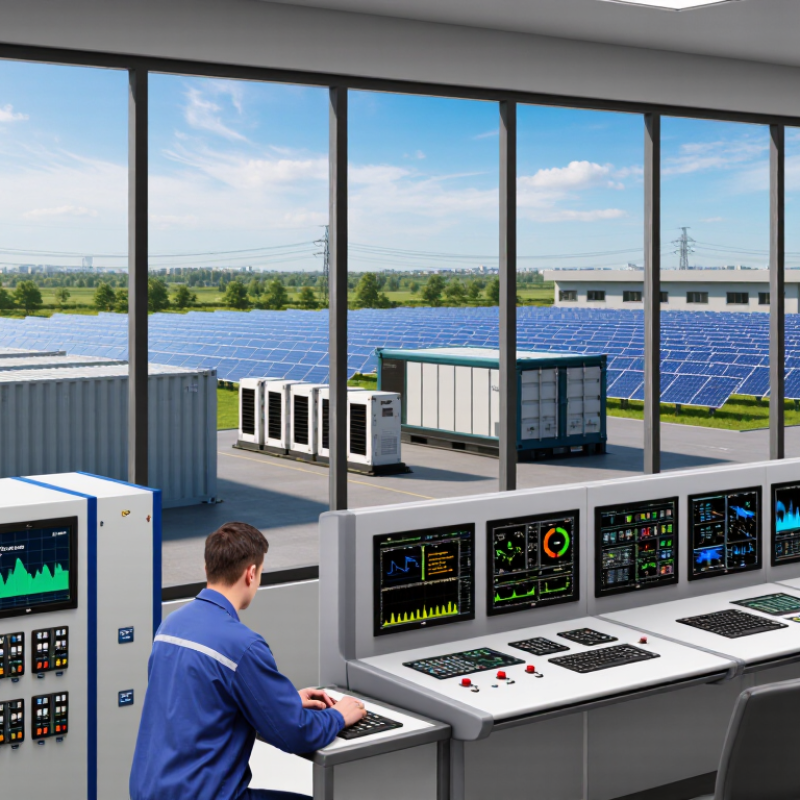
China’s most reliable microgrid is not defined by the largest solar array. It is defined by stable islanded operation. The International Energy Agency’s Renewables 2024 report expects China to provide nearly 60% of global renewable capacity additions through 2030. This growth increases the need for local systems that can control voltage, frequency, and power quality without the main grid.
Islanded operation begins with fast power balance. Battery storage should respond within milliseconds, while controllable generators manage longer shortages. Droop control shares load without depending on constant communications. An energy management system then coordinates forecasts, state of charge, and priority loads. Critical facilities need separate feeders. Protection settings must also change when the grid connection opens. IEEE 2030.7 identifies these control functions as core microgrid requirements.
Small details matter. A hospital corridor may need uninterrupted power. A factory motor can create a sudden voltage dip. The National Energy Administration reported that China’s renewable capacity exceeded 1.5 terawatts by the end of 2023, showing the scale of variable generation now entering power systems. Yet capacity alone does not guarantee resilience. Poorly sized storage, weak black-start planning, or delayed protection can destabilize an otherwise modern microgrid. Field testing should include cloudy weather, motor starting, communication loss, and low battery conditions. Perfect simulations are not enough. Real sites remain less predictable.
China’s most dependable islanded microgrids need more than solar panels and batteries. They need coordinated control, accurate protection, and tested operating procedures. China added about 297.6 GW of renewable capacity in 2023, according to IRENA’s Renewable Capacity Statistics 2024. This growth increases the value of flexible local systems when transmission support is unavailable.
Grid-forming inverters can establish voltage and frequency without an external grid reference. Battery energy storage then absorbs sudden load changes and supports black-start sequences. A layered energy management system should forecast weather, monitor state of charge, and reserve capacity for critical loads. The International Energy Agency reports that global battery storage capacity must expand sixfold by 2030. Reliable islanding will depend on smarter dispatch, not storage volume alone.
Protection must also adapt to bidirectional power flows and lower fault currents. Digital relays, sectionalizing switches, and intentional load shedding can prevent one fault from collapsing the entire system. IEEE 1547 provides a useful technical reference for distributed energy resource behavior, although local Chinese grid codes still require careful alignment. Field experience shows that commissioning is often underestimated. Tests should include cloudy-day ramps, motor starts, communication loss, and black-start recovery.
Small gaps remain. Human decisions can still defeat excellent automation.
Islanded operation depends on fast, coordinated control rather than battery size alone. A microgrid must balance active power within seconds when clouds cover solar arrays. The IEA reported that China led global renewable capacity growth in 2023, adding roughly 300 GW. This growth increases the need for dependable local frequency control.
Grid-forming inverters can establish voltage and frequency after disconnection. Droop control shares power between inverters without constant communication. Secondary control then restores frequency and voltage accuracy. A practical system may hold frequency near 50 Hz while managing battery state, motor starting, and sudden load changes. NREL research on microgrid controls highlights layered control and seamless transitions as essential for resilience. Small delays matter.
Voltage stability needs equal attention. Reactive power control can reduce voltage dips along long island feeders. Adaptive protection should respond to changing fault currents from inverter-based resources. However, protection settings are rarely perfect during unusual operating conditions. A controller may perform well in simulation but struggle with noisy measurements or an unexpected industrial load. Engineers should test black-start sequences, low-inertia events, and communication loss under realistic conditions. IRENA’s Renewable Capacity Statistics 2024 recorded China’s strong renewable expansion, but capacity figures alone cannot prove islanded stability. Site measurements, repeated commissioning tests, and transparent performance data remain more convincing.
Chinese microgrids are developing around energy storage and renewable integration. Practical commissioning work shows that islanded stability depends on coordinated control, not batteries alone. Solar output can fall within minutes when coastal clouds cover photovoltaic panels. A battery energy storage system can respond quickly and support frequency during that change. Fast controls matter. Voltage stability matters too.
Storage should not be sized only from average daily demand. Engineers need load profiles, seasonal weather records, and short-term renewable forecasts. A factory may require steady power for motors, refrigeration, and digital control systems. Hospitals and remote communities need stricter protection settings. Battery systems can provide reserve capacity, black-start support, and peak-shaving functions. Thermal storage may also reduce electrical demand during hot afternoons.
Chinese microgrids benefit from layered control architecture. Local controllers can act within milliseconds, while supervisory systems coordinate charging, curtailment, and flexible loads. Clear operating rules help prevent excessive battery cycling. Safety monitoring remains essential in crowded equipment rooms. Forecast errors remain unavoidable. That weakness deserves attention.
A resilient islanded system should maintain critical loads when renewable generation drops unexpectedly. It should also reconnect carefully after the utility supply returns. Field teams must test these transitions under realistic conditions, including low battery charge and sudden motor starts. Some designs still rely too heavily on ideal forecasts. More conservative planning may cost extra, but it can prevent uncomfortable failures during long cloudy periods.
| Microgrid Application | Typical Renewable Mix | Representative Renewable Share of Annual Electricity | Recommended Storage Duration | Islanded Operation Strategy | Key Stability Requirement | Suitability for Stable Islanded Operation |
|---|---|---|---|---|---|---|
| Remote Island or Coastal Community | Solar photovoltaic, wind power, and optional small hydro | 30%–70%, depending on seasonal resources and diesel backup availability | 4–8 hours for daily balancing; longer duration may be required during low-wind or low-solar periods | Grid-forming battery energy storage establishes voltage and frequency; dispatchable generation supports extended renewable shortages | Fast frequency response, black-start capability, protection coordination, and seawater-resistant equipment | High when storage and dispatchable backup are properly coordinated |
| Industrial Park | Rooftop solar, distributed wind where suitable, and limited external renewable supply | 15%–40%, constrained by roof area, process demand, and interconnection capacity | 2–4 hours for peak shaving, demand management, and short interruptions | Battery storage maintains critical industrial feeders while nonessential loads are curtailed through an energy management system | High power quality, low-voltage ride-through, harmonic control, and predictable load-shedding sequences | Very high for short-duration islanding and power-quality support |
| Rural County or Village Microgrid | Solar photovoltaic, small wind, agricultural waste or biomass, and small hydro where available | 25%–60%, subject to agricultural demand and local resource conditions | 4–6 hours for evening demand and renewable smoothing | Hierarchical control prioritizes hospitals, water systems, communications, and household loads during islanded operation | Simple protection settings, reliable communications, maintainability, and adequate reserve capacity | High for essential services when load prioritization is implemented |
| Port or Coastal Logistics Microgrid | Solar photovoltaic, offshore or nearshore wind where available, and shore-side energy storage | 20%–50%, influenced by crane loads, refrigeration, charging demand, and local wind conditions | 2–4 hours, with additional capacity for high-power charging or crane operation | Storage manages fast load changes; grid-forming inverters support critical port equipment during separation from the utility grid | High short-circuit coordination, transient stability, fire protection, and robust equipment in humid environments | High for critical logistics loads with fast inverter controls |
| University or Public-Service Campus | Rooftop solar, solar carports, and limited small-scale wind | 10%–35%, generally limited by available building and parking-area surfaces | 2–4 hours for emergency loads, peak reduction, and renewable self-consumption | Critical buildings are separated first; storage supplies emergency circuits while flexible loads are rescheduled | Reliable automatic transfer, clear critical-load classification, safe battery-room design, and tested operating procedures | High for planned outages and short islanded operation |
| Data Center or High-Availability Facility | Solar photovoltaic and contracted renewable electricity, supported by battery storage and standby generation | 5%–25% onsite renewable generation; reliability requirements generally limit reliance on variable generation alone | 0.25–2 hours for ride-through and transition support; longer duration requires additional generation or storage | Double-conversion power systems, grid-forming storage, redundant feeders, and dispatchable backup maintain uninterrupted critical loads | Very high availability, N+1 or greater redundancy, millisecond-scale transfer, thermal management, and strict protection selectivity | Very high for continuity, but not normally optimized for high renewable penetration |
| Renewable-Heavy Demonstration Microgrid | Solar photovoltaic, wind power, long-duration storage, and flexible demand | 50%–90% on an annual basis under favorable resource and storage conditions | 6–12 hours or more to reduce renewable curtailment and cover extended low-renewable periods | Multi-layer energy management coordinates grid-forming storage, renewable curtailment, flexible loads, and reserve generators | Accurate forecasting, sufficient spinning or synthetic reserve, black-start capability, and coordinated voltage control | Highest renewable integration potential, but most dependent on advanced controls and adequate reserves |
Data interpretation: The values shown are representative engineering ranges for Chinese microgrid applications rather than measurements from a single project. Actual performance depends on local solar and wind resources, load profiles, grid-connection conditions, storage chemistry, control architecture, safety requirements, and applicable Chinese technical standards.
Selecting China’s best islanded microgrid requires more than comparing solar capacity or battery size. The first test is black-start performance. Can the system restore critical loads without an external grid? Field commissioning should verify voltage recovery, frequency control, and protection coordination under real load changes. A 30-minute laboratory test is not enough.
Battery autonomy is another decisive criterion. The International Energy Agency reported that global battery storage additions reached about 42 GW in 2023, nearly doubling from the previous year (Batteries and Secure Energy Transitions, 2024). For an islanded site, storage must cover cloudy hours, motor starting, and unexpected generator outages. I would examine usable capacity, thermal management, degradation assumptions, and spare-part access. Rated capacity can mislead.
Cost and renewable quality must be assessed together. IRENA reported global weighted-average electricity costs of about USD 0.044 per kWh for utility-scale solar PV in 2023 (Renewable Power Generation Costs, 2024). Yet cheap generation does not guarantee stable operation. Controllers need fast frequency response, seamless transitions, and tested protection settings. Cybersecurity, local maintenance skills, and five-year fuel logistics also matter. Chinese projects should document performance in humid coastal, mountainous, and remote conditions. This is where many evaluations remain incomplete. A perfect model rarely survives dust, heat, or rushed maintenance.
Stable operation matters more than having the largest solar array. The system must control voltage, frequency, and power quality independently.
Batteries should respond within milliseconds to sudden power changes. Controllable generators can cover longer shortages. Timing matters greatly.
Droop control shares electrical loads among sources without constant communication. This helps maintain balance when communication becomes unavailable.
Critical facilities need separate feeders and priority settings. A hospital corridor, control room, or emergency pump may require uninterrupted power.
They establish voltage and frequency without relying on an external grid reference. This supports startup and stable islanded operation.
Assess usable capacity, temperature control, aging, spare parts, and cloudy-hour performance. Rated capacity can mislead. It is only a nameplate number.
Tests should cover motor starts, cloudy weather, communication loss, low battery conditions, and black-start recovery. Laboratory results alone are not enough.
Poor storage sizing, delayed protection, weak startup planning, or rushed maintenance can destabilize the system. Human decisions still matter.
No. Stable systems also need fast frequency response, coordinated protection, maintenance skills, and reliable fuel logistics.
Projects should be tested in humid coastal, mountainous, and remote locations. Dust, heat, and unexpected maintenance can expose hidden weaknesses.
China’s best microgrid for stable islanded operation should be designed around resilience, flexibility, and intelligent coordination rather than a single technology. A well-planned system combines distributed renewable generation, dependable backup resources, advanced inverters, protective equipment, and energy storage to maintain power quality when disconnected from the main grid. These elements must work together through accurate monitoring and rapid control responses, allowing the microgrid to balance supply and demand under changing conditions.
Effective control strategies are essential for frequency and voltage stability. Hierarchical control, adaptive load management, and coordinated battery operation can reduce disturbances and support seamless transitions between grid-connected and islanded modes. When evaluating a Chinese islanded microgrid, key criteria include response speed, renewable hosting capacity, storage performance, protection coordination, operational efficiency, scalability, maintenance requirements, and performance during prolonged outages. Ultimately, the most suitable solution is one that can Ensure Stable Operation in Islanded Microgrid Mode while delivering safe, reliable, and economical electricity for its intended users.
