June Power
As electricity systems approach 2026, Support Grid Frequency and Voltage Stabilization is becoming a reliability priority, not a technical luxury. Solar and wind output can change within minutes. Large data centers can add hundreds of megawatts with little warning. At the substation, operators may see voltage move before customers notice anything.
The International Energy Agency’s Electricity 2024 report projects global electricity demand will grow faster through 2026, driven by industry, cooling, electric vehicles, and data centers. Its analysis also stresses the need for stronger grids, flexibility, and responsive resources. The U.S. Energy Information Administration reports that renewable generation continues expanding, while conventional units retire or operate differently. That combination makes balancing more complex.
NERC’s 2024 Long-Term Reliability Assessment identifies resource adequacy, inverter-based resources, and extreme weather as major reliability concerns. NERC President and CEO Jim Robb has warned, “The grid is undergoing the most significant transformation in its history.” The message is clear.
But technology alone is not enough.
This 2026 guide examines practical solutions, including grid-forming inverters, synchronous condensers, STATCOMs, battery energy storage, automatic generation control, and advanced power-system monitoring. Each option solves a different problem. Batteries respond quickly. Synchronous condensers provide inertia and short-circuit strength. STATCOMs support voltage during disturbances.
The difficult part is integration. A device may perform well in a laboratory but disappoint under weak-grid conditions, poor protection settings, or insufficient communications. That deserves more attention. Reliable planning requires verified field data, transparent performance testing, cybersecurity controls, and compliance with applicable grid codes. The best solution is rarely the newest one. It is the one that remains stable when the system becomes unpredictable.
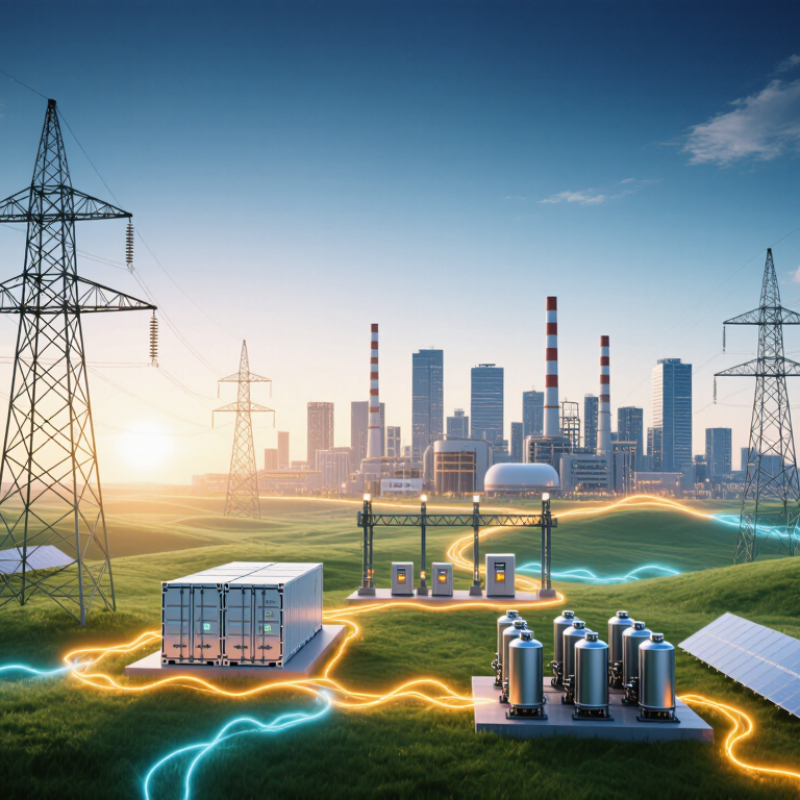
2026 Best Grid Frequency and Voltage Support Solutions?
Grid Frequency and Voltage Support: Core Concepts and Grid Needs
A stable grid depends on two linked conditions: frequency balance and acceptable voltage. Frequency shows whether generation matches demand. When a factory starts several motors, demand can rise within seconds. Frequency then falls unless flexible resources respond quickly. Voltage behaves differently. It depends on reactive power, network impedance, and local conditions. A feeder may show healthy frequency while its far end experiences low voltage. This distinction matters in practical grid planning.
Tips: Define the support location before selecting equipment. Record voltage and frequency at short intervals. Test recovery, islanding, and repeated events under approved procedures. Leave operating headroom. A fully loaded asset cannot respond gracefully. Review seasonal demand, maintenance states, protection settings, and communication delays. Field measurements remain essential. Simulations can miss loose connections or unusual load patterns. That happens.
Fast batteries may inject active power during frequency dips. Inverters can provide reactive power near a monitored bus. Synchronous machines, flexible loads, and stronger lines may add grid strength. Each option has limits. The best solution is rarely the largest one. It should match event speed, network weakness, and operating rules. Some assumptions will be wrong. Update them after commissioning data arrives. A five-minute peak can expose weaknesses that average data hides.
Grid stability depends on layered resources that respond at different speeds. The chart shows representative engineering response-time benchmarks for common frequency and voltage support functions.
Inertial and dynamic voltage responses act almost immediately, fast frequency response typically operates within seconds, primary frequency control follows within several seconds, and secondary control restores system frequency over tens of seconds to minutes. Actual requirements vary by grid code, system size, technology, and disturbance conditions.
Modern grids need fast frequency regulation and precise voltage stability as renewable generation replaces rotating machines. Battery systems can respond within milliseconds, absorbing excess power or releasing stored energy during sudden demand changes. Their control software should coordinate droop response, automatic generation control, and state-of-charge limits.
Seconds matter.
Voltage support requires a different approach. Static compensators provide rapid reactive power near weak substations, while synchronous condensers add short-circuit strength and physical inertia. Grid-forming inverters can establish stable voltage waveforms, especially on isolated feeders or renewable-heavy networks.
Local control helps.
However, engineers must study fault behavior, harmonics, protection settings, and communication delays before installation.
A dependable design begins with measured grid data, not assumptions. Phasor measurement units can reveal oscillations that ordinary meters miss. Field commissioning should test low-voltage events, frequency ramps, islanding risks, and recovery after faults.
One practical lesson is often overlooked: a device may perform perfectly in simulations yet react poorly to noisy measurements.
That trade-off matters.
Operators also need clear alarms, maintenance access, and manual fallback procedures. The best solution is rarely the largest one; it is the combination that matches network strength, response time, and operating conditions.
Evaluating grid support solutions in 2026 requires more than comparing rated power. Operators should examine frequency response, voltage regulation, response time, and performance during repeated disturbances. A useful assessment begins with real operating data, not only laboratory claims. Check how quickly the system reacts after a sudden load change. Then measure whether voltage remains stable at the feeder’s weakest point.
Field experience shows that performance often changes with temperature, state of charge, network strength, and control settings. Request test results from independent engineers and compare them with applicable grid codes and technical standards. Interoperability also matters. The solution should communicate reliably with protection systems, plant controllers, and dispatch platforms. Cybersecurity controls, maintenance access, and clear incident records deserve equal attention. A technically impressive system can still create operational problems when its controls are poorly documented.
Tips: Build a scoring table before reviewing proposals. Include response time, accuracy, operating range, lifetime, serviceability, and total lifecycle cost. Test several disturbance scenarios, including low-load and high-renewable conditions. Ask suppliers to explain failures, not only successes. I have seen evaluations focus heavily on peak output while ignoring recovery behavior. That was a mistake. A better review includes witnessed testing, transparent assumptions, operator training, and a defined process for updating control settings after grid changes. Reliability is demonstrated over time, not promised in a brochure.
| Solution Type | Primary Grid Support | Typical Response Time | Typical Support Duration | Reactive Power Capability | Frequency Support Capability | Best-Fit Applications | Key Evaluation Considerations |
|---|---|---|---|---|---|---|---|
| Grid-Forming Battery Energy Storage | Fast frequency response, synthetic inertia, voltage regulation, black-start support | Milliseconds to seconds | Seconds to several hours, depending on energy capacity | Four-quadrant operation; commonly sized near the inverter active-power rating | Excellent; active power can be increased or reduced rapidly | Weak-grid connection, renewable integration, islanded operation, congestion relief | State-of-charge reserve, degradation, thermal limits, grid-forming controls, fault behavior, duration requirements |
| STATCOM | Dynamic voltage support and power-quality improvement | Sub-cycle to a few milliseconds | Continuous, subject to thermal rating | Typically ±20% to ±100% of the converter MVA rating, project dependent | Limited; generally does not provide sustained active-power balancing without energy storage | Voltage-sensitive industrial loads, renewable plants, weak transmission nodes, flicker mitigation | Voltage range, short-circuit ratio, overload duration, harmonic performance, cooling, fault-current contribution |
| SVC | Steady-state and dynamic voltage regulation | Approximately 10–30 milliseconds | Continuous, subject to component and thermal limits | Often several tens to hundreds of MVAr, depending on system design | Minimal direct active-power response | Transmission corridors, large motors, arc furnaces, industrial substations | Performance at low voltage, harmonic filters, thyristor losses, minimum and maximum operating voltage |
| Synchronous Condenser | Reactive power, short-circuit strength, inertia and voltage stabilization | Hundreds of milliseconds to seconds | Continuous operation | Commonly tens to several hundred MVAr, project dependent | Indirect support through physical inertia; no sustained active-power injection | Low-inertia regions, weak grids, renewable hubs, high-voltage transmission substations | Mechanical losses, maintenance, footprint, fault-current contribution, inertia requirement and operating cost |
| Grid-Following Inverter with Ancillary Controls | Fast active-power and reactive-power response when a sufficiently strong grid reference is available | Milliseconds to hundreds of milliseconds | Seconds to continuous operation, subject to energy source and thermal limits | Typically controlled within the inverter MVA and current limits | Good for fast response; dependent on available headroom and grid strength | Solar and wind plants, hybrid plants, distributed energy resources | Short-circuit ratio, phase-locked-loop stability, headroom, current priority, ride-through compliance |
| Demand Response and Flexible Loads | Frequency balancing, peak reduction and emergency load relief | Seconds to minutes | Minutes to hours, depending on customer process | Indirect voltage benefit through reduced local loading | Good for contingency response when sufficient interruptible capacity is available | Commercial buildings, water systems, cold storage, data centers and industrial processes | Baseline accuracy, customer participation, rebound effects, automation, measurement and verification |
| Hybrid BESS + Dynamic VAR System | Combined frequency regulation, voltage support, ramp control and power-quality management | Sub-cycle for voltage; milliseconds to seconds for frequency | Continuous VAR support plus storage-limited active-power support | Independently optimized within converter, transformer and interconnection limits | Excellent when controls coordinate active and reactive power priorities | Renewable hubs, constrained substations, microgrids and sites with multiple grid-code obligations | Control coordination, protection settings, operating modes, cybersecurity, augmentation and lifecycle cost |
Grid frequency and voltage support are becoming essential across renewable, storage, and conventional power systems. The IEA’s Electricity 2024 report expects renewables to provide over 90% of global electricity demand growth from 2024 to 2026. This rapid change increases the need for fast, coordinated control. Solar and wind plants can provide reactive power, voltage regulation, and synthetic inertia through advanced inverters. However, performance depends on network strength, communication quality, and accurate plant models.
Battery energy storage systems can respond within milliseconds during sudden frequency deviations. They also absorb excess solar power and discharge during evening demand peaks. IRENA’s Renewable Capacity Statistics 2025 recorded 585 gigawatts of renewable capacity additions in 2024. That figure shows the scale of integration pressure. Grid-forming inverters, STATCOM systems, and carefully sized battery reserves can support weak grids. Yet storage duration remains a practical limitation. A four-hour battery cannot solve every multi-day imbalance.
Conventional power stations still provide valuable rotating inertia and fault current. Governors, automatic voltage regulators, and power-system stabilizers can improve frequency and voltage performance. Synchronous condensers may strengthen renewable-heavy transmission corridors without generating electricity. NERC reliability assessments repeatedly highlight the need for accurate inverter models and tested operating procedures. Field experience suggests that hybrid support works best. No single device is sufficient. Some projects still underestimate maintenance, control interactions, and extreme-weather conditions. Those gaps deserve more engineering attention before final investment decisions.
Grid support is moving from mechanical inertia toward fast, software-defined control. IRENA’s Renewable Capacity Statistics 2024 reports 473 GW of renewable capacity additions in 2023. These installations increasingly rely on inverter-based resources. They can respond within milliseconds, but their performance depends on accurate models, strong communications, and disciplined commissioning.
Implementation should begin with site measurements, not assumptions. Controllers need frequency-watt and volt-var functions, clear deadbands, and tested ramp limits. Grid-forming controls can establish voltage and frequency during weak-grid conditions. Grid-following controls remain useful where stable voltage references already exist.
A hybrid plant may combine batteries, solar inverters, synchronous machines, and dynamic reactive compensation. At a substation, engineers should verify fault-ride-through behavior, protection coordination, harmonic limits, and recovery after a voltage dip.
Small details matter.
The IEA’s Electricity 2024 report expects global electricity demand to grow by an average 3.4% annually through 2026. This growth increases pressure on transmission corridors and local voltage management. NERC’s 2024 State of Reliability also emphasizes changing system behavior as inverter-based resources expand. Adaptive settings, real-time observability, and hardware-in-the-loop testing can reduce hidden risks. Yet many studies still use simplified assumptions. That is a weakness. Field data should continuously refine digital models, especially during cloudy ramps, low short-circuit conditions, and simultaneous plant trips. Future control platforms will likely coordinate distributed batteries, flexible demand, and grid-forming assets through secure, interoperable interfaces. Reliability should remain measurable at every control layer.
Renewable sources respond differently from rotating generators. Battery systems can react within milliseconds. They absorb excess electricity or release stored energy after sudden demand changes. Fast response helps limit frequency swings, but recovery behavior also matters.
Controllers can combine droop response, automatic generation control, and state-of-charge limits. The battery must preserve enough energy for later events. A system that reacts quickly but empties too soon is not dependable. That risk deserves more attention.
Static compensators provide rapid reactive power near weak substations. Synchronous condensers add physical inertia and short-circuit strength. Grid-forming inverters can establish stable voltage waveforms on isolated feeders. The right combination depends on network strength and operating conditions.
Engineers should use measured grid data, not assumptions. Phasor measurement units can reveal oscillations that ordinary meters miss. They should examine feeder voltage, fault levels, harmonics, and communication delays. Small details matter.
Testing should include low-voltage events, frequency ramps, and recovery after faults. Engineers should also examine islanding risks and repeated disturbances. Witnessed field testing is stronger than laboratory claims alone. Simulation results can still mislead.
Compare response time, accuracy, operating range, lifetime, serviceability, and lifecycle cost. Check performance during low-load and high-renewable conditions. Temperature, state of charge, network strength, and control settings can change results. Peak output is not enough.
Controllers need clear deadbands, frequency-watt functions, volt-var functions, and tested ramp limits. Reliable communication with protection systems and dispatch platforms is essential. Poorly documented controls can create operational problems. That weakness is easy to overlook.
Operators need clear alarms, maintenance access, incident records, and manual fallback procedures. They should update digital models with field data after grid changes. Training should cover cloudy ramps, weak-grid conditions, and simultaneous plant trips. Reliability develops over time.
In 2026, grid frequency and voltage support will be essential for maintaining a reliable, flexible, and resilient power system. As renewable generation grows, variable output from wind and solar can create faster frequency changes and local voltage fluctuations. Effective solutions combine grid-forming and grid-following control, battery energy storage, fast-response generation, reactive power equipment, advanced inverters, and coordinated demand response. Together, these technologies help Support Grid Frequency and Voltage Stabilization while improving system flexibility and reducing the risk of instability.
When evaluating grid support solutions, decision-makers should consider response speed, control accuracy, scalability, efficiency, interoperability, cybersecurity, lifecycle cost, and compliance with grid requirements. Applications extend across renewable plants, storage facilities, conventional power stations, microgrids, and transmission or distribution networks. Successful implementation depends on accurate system studies, adaptive control strategies, real-time monitoring, and coordinated operation between assets. Future development will focus on intelligent automation, hybrid resources, digital grid management, and more resilient control systems capable of responding to increasingly complex grid conditions.
